
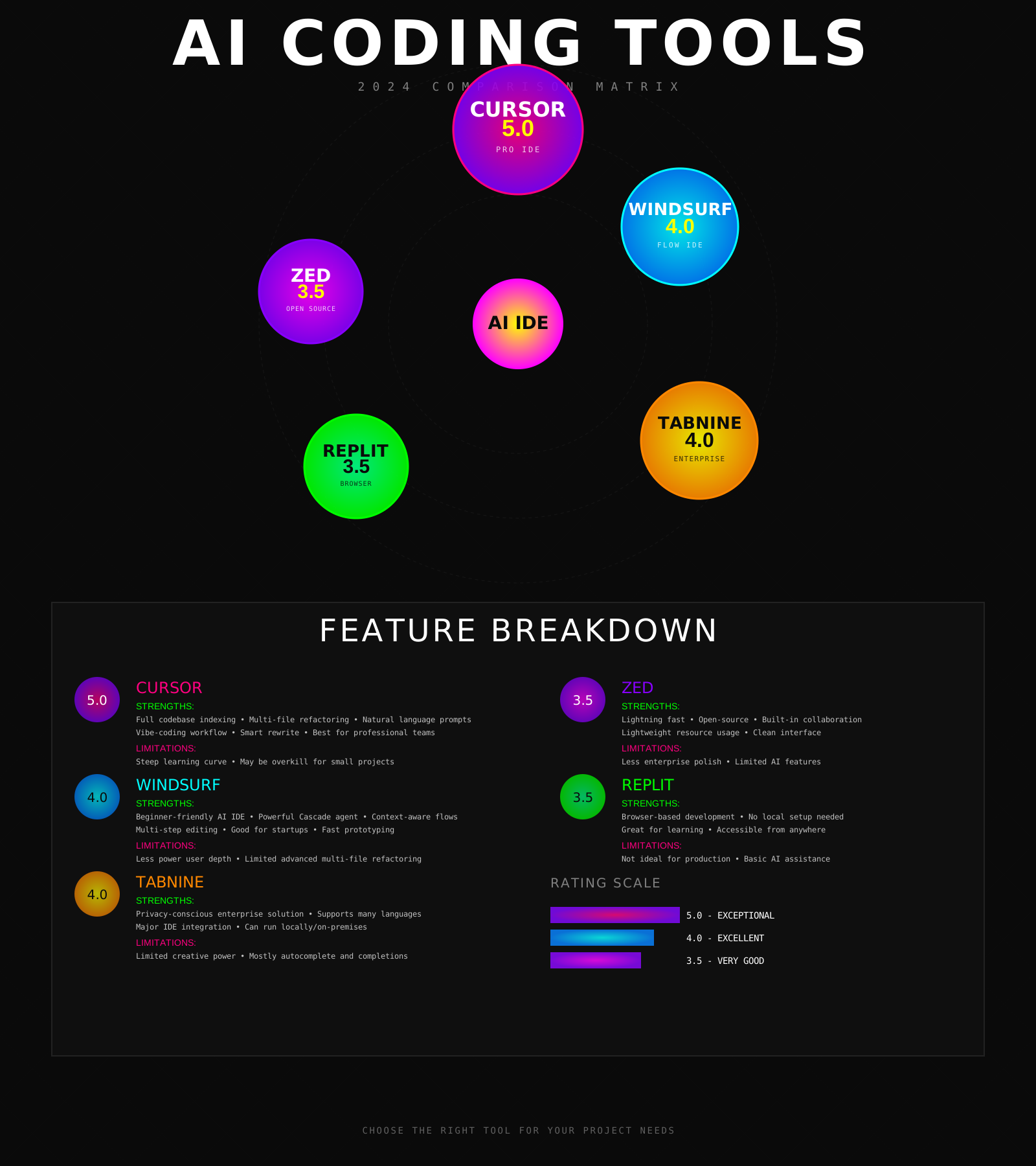
Software engineering is undergoing a structural shift in which AI-powered IDEs are becoming the primary coordination layer of development work rather than passive tools. Modern AI IDEs can index entire codebases, generate and modify multi-file code, assist with debugging, and perform refactors, transforming the IDE into an active participant in engineering decisions. The current landscape forms an ecosystem organized around this new core idea, with tools such as Cursor emphasizing deep codebase reasoning, Windsurf and Tabnine acting as fast, accessible followers, and Zed and Replit expanding access for beginners and global developers. The significance lies not in individual products but in the ecosystem pattern itself: when tools evolve into coordination layers, industries reorganize. In this shift, AI compresses and automates lower-level engineering work such as boilerplate, routine debugging, and mechanical refactoring, while increasing the value of human work in system design, architecture, cross-domain reasoning, and leadership. As a result, professional advantage shifts from writing code to operating at higher abstraction levels, working with AI systems as collaborators rather than treating them as peripheral tools.